

La apertura de una empresa es la forma más común de emprendimiento en Estonia, independientemente del alcance y la escala de la actividad: negocios globales sin fronteras, para la colocación segura de activos personales y como sociedad de cartera para optimizar la estructura corporativa.
El sistema de impuestos corporativos en Estonia es muy atractivo desde el punto de vista de los empresarios. El hecho de que la ganancia de la empresa no esté gravada con el impuesto sobre la renta, solo se grava la parte distribuida de la ganancia. Tal sistema permite a la empresa determinar el momento y el monto de la carga tributaria. En caso de que el beneficio no se distribuya (o, por ejemplo, se invierta), la empresa en Estonia no tiene obligaciones fiscales. Esto lo confirma el hecho de que durante siete años Estonia ocupa el primer lugar en el ranking de competitividad fiscal, que publica anualmente el Fondo Fiscal Internacional y que muestra qué tan bien el sistema fiscal de un país fomenta el espíritu empresarial.


Ideal para startups. El sistema fiscal estonio permite el desarrollo empresarial sin tener que pagar impuestos, y es perfectamente legal. Como resultado, desaparece la necesidad de subestimar artificialmente las ganancias, lo que a su vez hace que la empresa sea atractiva para los inversores potenciales.
Ubicación segura de los activos. Estonia es un país de la UE estable con una buena reputación y un sistema legal confiable. Al colocar sus activos (tanto tangibles como intangibles) en la empresa estonia, puede estar seguro de su total seguridad. Una empresa estonia puede, por ejemplo, poseer bienes inmuebles (en todo el mundo), marcas comerciales, patentes, software, acciones, valores, etc. Administración remota. Estonia es una de las sociedades digitales más avanzadas del mundo. No es necesario venir a Estonia ni para abrir ni para gestionar la empresa.
Rellenas un sencillo formulario de registro y pagas el pedido. En el plazo de un día hábil, la empresa se registra y se le envía por correo electrónico un poder notarial para su renovación. Certificación de poder notarial. Usted certifica el poder que se le envió en la notaría y lo envía. Dentro de los siete días hábiles siguientes a la recepción del poder notarial se formaliza la sociedad a su nombre y se realizan los cambios necesarios en el Registro Mercantil y se puede iniciar la actividad.
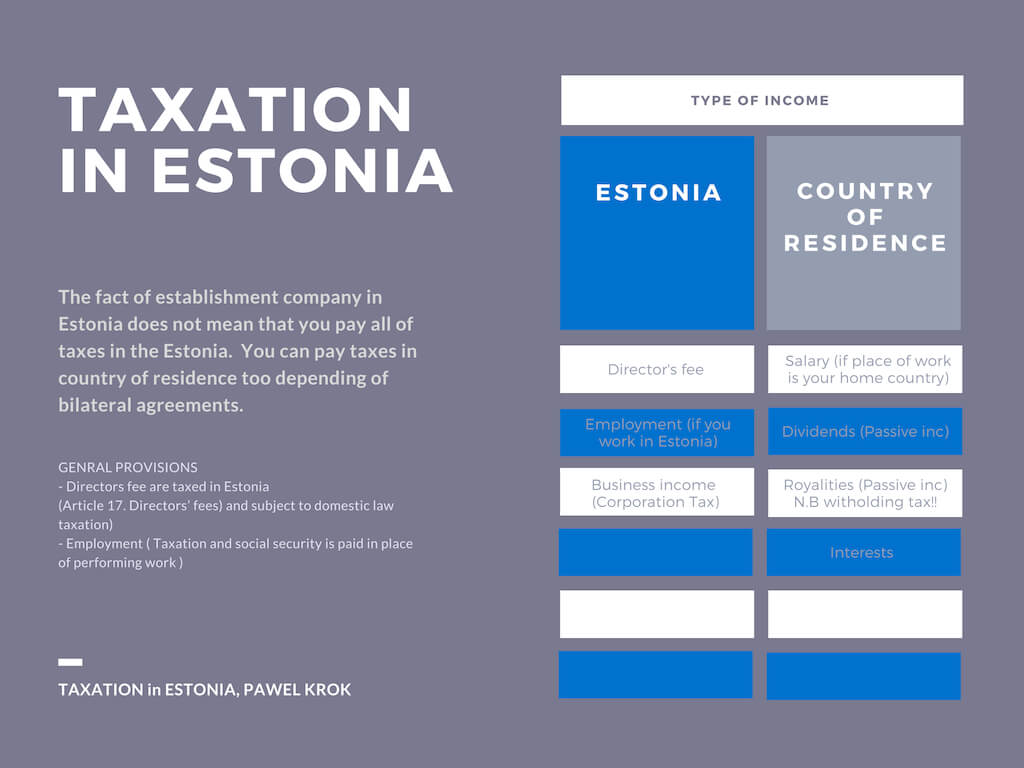
La tasa del impuesto sobre la renta en Estonia es del 20% para personas físicas y jurídicas. Sin embargo, hay una característica única que hace que el sistema de impuestos corporativos que opera en Estonia sea extremadamente atractivo desde el punto de vista de los empresarios. El hecho de que la ganancia de la empresa no esté gravada con el impuesto sobre la renta, solo se grava la parte distribuida de la ganancia. Tal sistema permite a la empresa determinar el momento y el monto de la carga tributaria. En el caso de que la ganancia no se distribuya (o, por ejemplo, se invierta), entonces no surgen obligaciones fiscales para la empresa; dicho sistema le permite participar en el desarrollo comercial sin tener que pagar impuestos, y es completamente legal. Por supuesto, no hay necesidad de subestimar artificialmente las ganancias, lo que a su vez hace que la empresa sea atractiva para los inversores potenciales. En el momento de la adhesión de Estonia a la UE, se planteó la cuestión del cumplimiento de la legislación fiscal estonia con las directivas aplicables, pero afortunadamente el sistema estonio fue respaldado por el Tribunal de Justicia de la Unión Europea y no está sujeto a cambios.